Nov 26
Can Your Teams Learn from Video Games?
Use Games for Learning
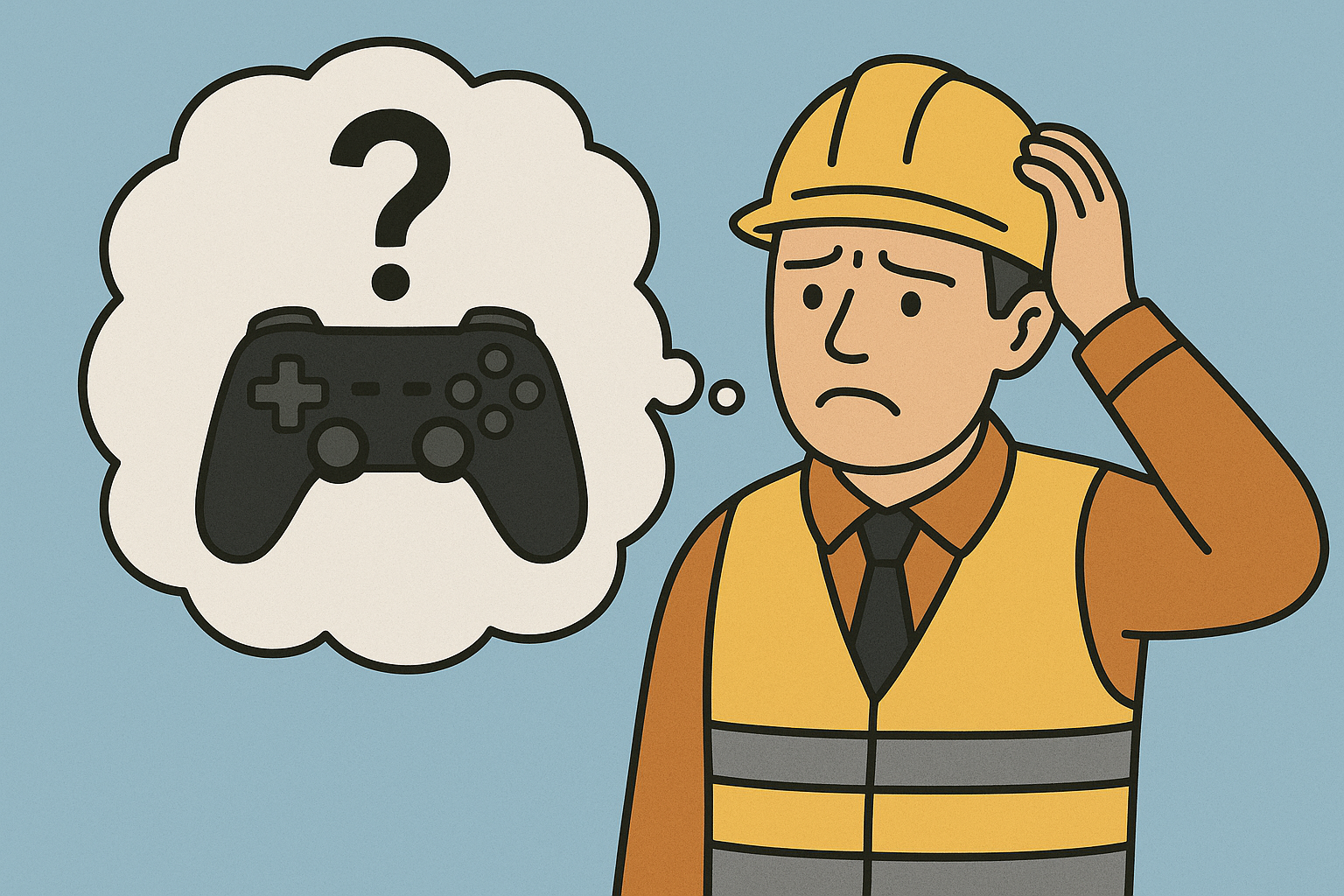
If you asked most safety or operations leaders ten years ago whether video games belonged in a training program, the answer would’ve been an immediate “no”. Games were entertainment (or a distraction) not a tool for teaching critical procedures.
But today, the data tells a very different story. The same mechanics that make games engaging, challenging, and memorable are the exact traits missing from most traditional training. And when you apply those mechanics with the purpose of teaching, the results are hard to ignore.
Can people actually learn from video games? The answer is yes!
Why Games Work for Safety
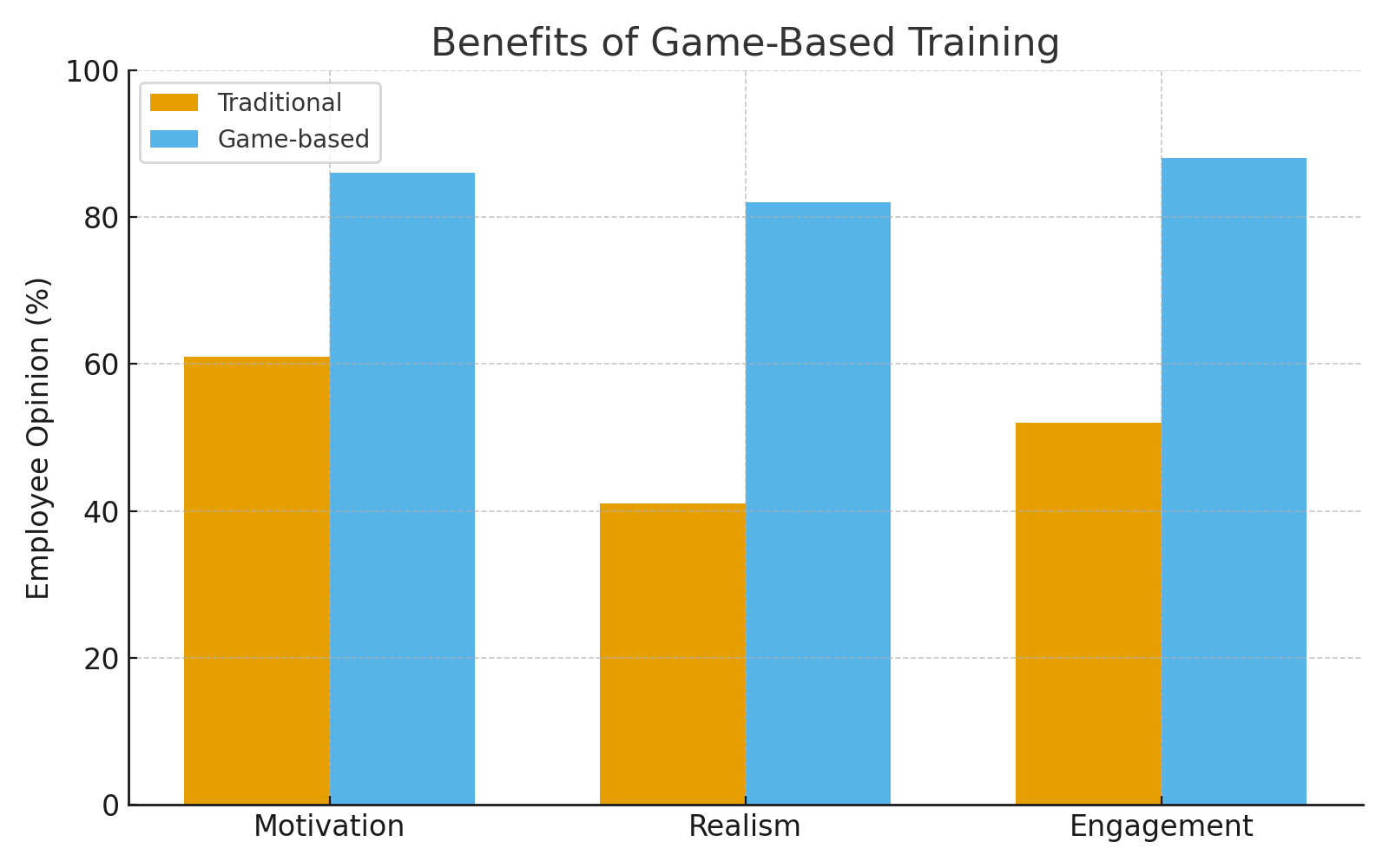
These numbers come from internal research discussed in "Should I Update My Training Program", focusing on how interactive, gamified elements improve employee engagement and retention.
1. Games force active participation
Traditional training is passive. Employees sit, listen, watch, and try to absorb information; but very little of that translates into instinctive, repeatable behavior. Games flip this model completely. Instead of receiving information, learners use it.
In a simulation, employees are required to:
In a simulation, employees are required to:
- Spot hazards as they appear, move, or evolve — just like on a real floor or facility.
- Make decisions based on conditions, procedures, and priorities in front of them.
- Navigate environments, building spatial awareness and familiarity with equipment layout.
- Solve problems under time or pressure, a core skill in manufacturing and operations.
Every action produces immediate feedback: a warning, a consequence, a reward, or a correction. That feedback loop is what makes interactive learning so effective. In a digital twin, that could mean selecting the wrong LOTO point and seeing the system flag the hazard instantly, or walking through a pump-restart sequence and getting a corrective prompt the moment a step is missed. The realism of those cause-and-effect moments is what helps operators build muscle memory before they ever touch real equipment.
This active cycle of doing, reacting, and adjusting builds skills faster and deeper than any PowerPoint or lecture ever could.
2. Games train the brain the way real work does
Games train the brain by recreating the same conditions under which real-world instincts are formed. Instead of passively hearing information, employees practice thinking and reacting. This causes the brain to build the mental pathways that matter on the job.
- They build procedural memory through action.
When learners actually perform steps (isolating energy, choosing the right tool, confirming a pressure change) the brain encodes the sequence the same way it does during hands-on work. This turns instructions into automatic behavior. - They sharpen pattern recognition.
Repeated exposure to realistic hazards, abnormal readings, equipment cues, and near-miss situations trains the brain to spot patterns instantly. Over time, the brain starts identifying risks without conscious effort; the same intuition experienced operators develop. - They strengthen decision-making under pressure.
Simulations introduce time constraints, consequences, and changing conditions. This engages the brain’s “decision under load” circuitry, improving how quickly and accurately employees choose the right action when it counts.
By activating these core learning systems, games teach the brain the way field experience works, something traditional training can't replicate.
3. Games allow mistakes without consequences
One of the biggest advantages of game-based training is that it lets employees fail safely — something real worksites can’t offer. In the field, even small mistakes can carry major consequences:
- A misstep can shut down a production line.
- A wrong valve can trigger a process upset or create a hazardous state.
- A moment of distraction can lead to injury.
In a simulation, those same mistakes become ways to learn. Employees can see what went wrong, replay the scenario, and try a different approach without risk to people, equipment, or production. This “safe failure” does something traditional training can’t: it creates impact without real-world harm.
When learners experience the consequence of a bad decision, the brain encodes it more deeply. It sticks. And because they can immediately retry, reflect, and correct, they build confidence and judgment long before they touch a live system.
Safe failure doesn’t just prevent incidents. It accelerates competence.
Write your awesome label here.
Why Video Games Stick Better Than Slides
Studies in cognitive science are clear: people remember more when they are emotionally and physically engaged in the learning process. That is where game-based training stands out. Games naturally create the elements that deepen retention, including challenges, progression, immersion, and immediate feedback. Each of these activates the brain in ways passive training can’t.
When employees “play through” a safety scenario (i.e. LOTO, confined space, forklift navigation, electrical hazards, etc.), they are not simply watching what should happen. They are experiencing it. That hands-on interaction builds instincts and confidence that translate directly into better, safer performance on the job.
The challenge built into a game motivates focus, while progression encourages repetition and reinforces correct behavior. Immersive environments make information feel real, which improves memory and recall. Immediate feedback strengthens learning loops and helps employees course-correct in the moment rather than after the fact.
When employees “play through” a safety scenario (i.e. LOTO, confined space, forklift navigation, electrical hazards, etc.), they are not simply watching what should happen. They are experiencing it. That hands-on interaction builds instincts and confidence that translate directly into better, safer performance on the job.
Where Games Fit into a Modern Safety Program
Game-based learning doesn’t replace existing training; it makes it stronger. Most organizations use it to enhance:
- New-hire training
- Annual refreshers
- Hazard identification practice
- Emergency response rehearsals
- Competency verification
- Cross-training and upskilling
And because these games run in a browser, they scale to contractors, temps, and distributed teams without requiring hardware or installations.
Game-Based Learning Is a Practical Choice for Modern Training
Some leaders worry that games may feel "childish", but that concern usually fades once they see how employees respond to realistic, simulation-based training. Modern safety games are built on real procedures, real hazards, and real equipment. They mirror the actual work environment with accuracy that traditional methods cannot achieve.
These tools are created specifically for adult learners. While fun and engaging, the game mechanics are not just for entertainment. They are designed to strengthen skills such as repetition, decision-making, spatial awareness, and recognizing the consequences of actions. Employees practice the same cognitive and procedural tasks they perform on the job, only in a safe and repeatable setting.
This approach also matches the needs of the current workforce. Employees today learn best through interaction, visuals, and hands-on activity. The high stakes of industrial work make it important to move beyond passive instruction and adopt methods that reflect how people learn most effectively.
Game-based learning provides advantages that traditional training cannot offer:
- A safe place to practice and make mistakes without consequences
- A realistic environment that builds confidence and situational awareness
- Procedures that are easier to remember because the brain retains what it experiences
- A modern learning format that employees willingly engage with
For any organization focused on preventing injuries, closing knowledge gaps, and building stronger operators, simulation-based learning is not a novelty. It is a practical and effective step forward in how we prepare people for real work.
Last week we discussed the importance of digital twins for modern learning. Join us on a journey through the “8 Steps of Modernization”.
Interested in learning more? Reach out to us here: calendly

Welcome!
Please find on this page your required safety trainings.
Note that you will find both English and Spanish versions of courses. You will only be required to take one or the other.
Note that you will find both English and Spanish versions of courses. You will only be required to take one or the other.